A Guide to Beef Types, Breeds, and Labels
Not all beef is the same, and the differences go well beyond the kitchen. Here's what actually separates a good steak from a great one, before it ever hits the pan.
Shop Beef →
Not All Beef Is Created Equal
Four companies control roughly 85% of beef processing in the United States. At that scale, efficiency tends to win out over transparency, and the industry has faced real scrutiny over worker conditions, animal welfare, and regional sourcing along the way.
That's a large part of why grocery store beef costs less. It's also why an Angus steak from a certified farm and an Angus steak from a warehouse can taste like two different foods entirely, even with the same breed name on the label.
You do get what you pay for. Beef is a luxury item when it's done right, and doing it right, raising an animal to maturity, treating the people and the land with respect, processing it with care, costs something. We'd rather you eat the best you can afford than settle for a name on a package.
Decoding the Label
Beef labeling is confusing, and not by accident. Most of the terms on a package are either unregulated, loosely regulated, or mean something narrower than they sound.
| Label | What It Actually Means |
|---|---|
| Product of the USA | A voluntary term. It can apply to meat processed in the U.S. without the animal having been raised here. |
| Natural | Refers only to processing, no artificial ingredients, minimal processing. Says nothing about how the animal was raised. |
| Organic | Requires pasture access, non-GMO organic feed, and lower-stress conditions. Grass is not required. Farms are inspected for compliance. |
| Grass-Fed | Refers to diet, not outdoor access, and doesn't guarantee grass-finished. Look for AGA certification for a real standard. |
| Grass-Finished | The animal ate grass and hay for its entire life, no grain finishing. Typically leaner, with less intramuscular fat. |
The short version: ask questions, and trust the source over the sticker. A label tells you what's legally allowed to be said. A trusted butcher tells you what actually happened on the farm.
Major Beef Breeds
| Breed | Origin | Character | What to Look For |
|---|---|---|---|
| Angus | Scotland | Rich, beefy flavor, naturally high marbling, consistently tender | Certified Angus Beef for guaranteed marbling and genetic standards |
| Wagyu | Japan | Buttery texture, extremely rich, very tender | "100% Full-Blood Wagyu" for no crossbreeding with Angus |
| Hereford | England | Leaner than Angus, slightly mineral flavor, good texture when aged | Hardy, efficient grazers, a reliable everyday beef |
| Charolais | France | Leaner, mild flavor, very tender when properly aged | High muscle yield, often used in crossbreeding programs |

Have You Heard of These Breeds?
We carry Angus and Wagyu, and stand behind both completely. But two other breeds deserve a mention, if only because so few people seem to have heard of them.
Hereford, with its red body and white face, is one of the hardiest, most efficient grazing breeds in the world. That efficiency shows up on the plate: leaner than Angus, with a slightly mineral character and excellent texture once properly aged.
Charolais, a large, cream-coated breed out of France, is prized for high muscle yield and a milder, leaner flavor profile, remarkably tender when properly aged.
Neither is "better" than the Angus or Wagyu we carry, just different tools for a different kind of meal. Worth knowing about, even if you won't find them in your next WOLFS order.

Fresh vs. Frozen
Frozen beef can be just as good as fresh when it's handled properly. Look for a high-quality vacuum seal and evidence of flash freezing, commercial blast freezers work fast enough to prevent the large ice crystals that damage muscle fiber. When you're ready to cook it, thaw overnight in the fridge rather than rushing it. Slow and cold preserves moisture; fast and warm doesn't.
What to Look For When Buying High-Quality Beef
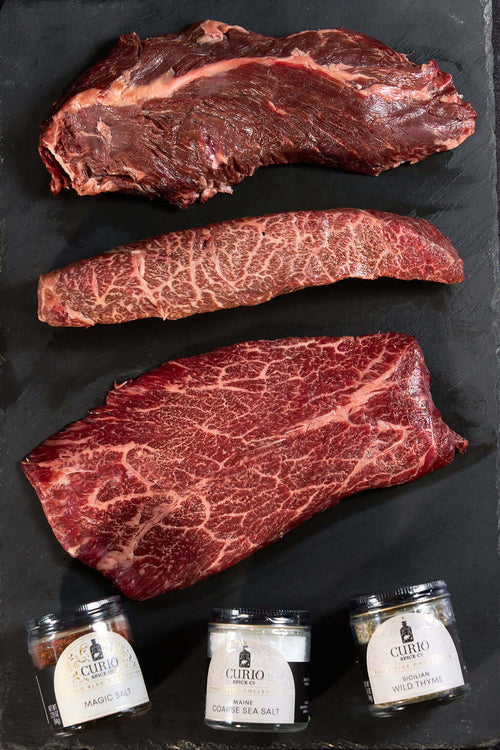
Marbling
Thin streaks of fat within the meat add flavor and tenderness.
Color
High-quality beef should be deep red and firm, not dull or grey.
Thickness
For steaks, 1–2 inches generally cooks most evenly.
Aging
Dry-aged beef develops deeper flavor and tenderness over time.
The Source
A trusted farm, butcher, or curated marketplace beats a label every time.
We Partner With Farms, Not Warehouses
Every farm we work with prioritizes animal welfare, responsible land management, and flavor that earns its place on your table. That's not a marketing line, it's the actual filter we use before anything makes it into a WOLFS bag.
Our goal is simple: connect you with beef that reflects the care that went into raising it. Whether that's a Certified Angus ribeye or an American Wagyu cut, the standard doesn't change.
Shop Beef →Frequently Asked Questions
What are the main types of beef breeds?
The most common in the Northeast are Angus, Wagyu, Hereford, and Charolais, each with a distinct flavor and texture profile, from Wagyu's rich marbling to Hereford's leaner, mineral character.
What's the difference between natural, organic, and grass-fed beef?
Natural refers only to processing, no artificial ingredients. Organic requires pasture access and organic feed. Grass-fed refers to diet, not necessarily grass-finished. None of the three guarantee outdoor access or animal welfare on their own, which is why sourcing matters more than the label.
What should I look for when buying high-quality beef?
Marbling, color, thickness, and aging all matter, but the biggest factor is trust in the source. A trusted farm or butcher will consistently outperform a label.
Is Wagyu beef always 100% Wagyu?
Not always. Most American Wagyu is a cross between Wagyu and Angus cattle. Look for "100% Full-Blood Wagyu" if you want guaranteed Wagyu genetics with no crossbreeding.
Where can I find the best beef delivery in New England?
WOLFS delivers Certified Angus, American Wagyu, and other quality-vetted beef across Rhode Island and Southern Massachusetts, sourced from farms we've personally chosen for their standards, not their price point.
Ready to Taste the Difference?
Shop Certified Angus, American Wagyu, and more, sourced from farms that treat beef like the luxury item it is.

Shop This Recipe
The finest local ingredients — sourced and delivered to your door.